
Dialing In, Decoded: How Electrochemistry Helps Us Understand Espresso Extraction
Read the full article on the SCA Portal.
The SCA’s Content Development Manager, Laurel Carmichael, speaks to researchers at the Hendon Coffee Lab about their chemistry lab that looks like a café, and about how they use electrochemistry and Design of Experiments to better understand the complexities of espresso extraction.
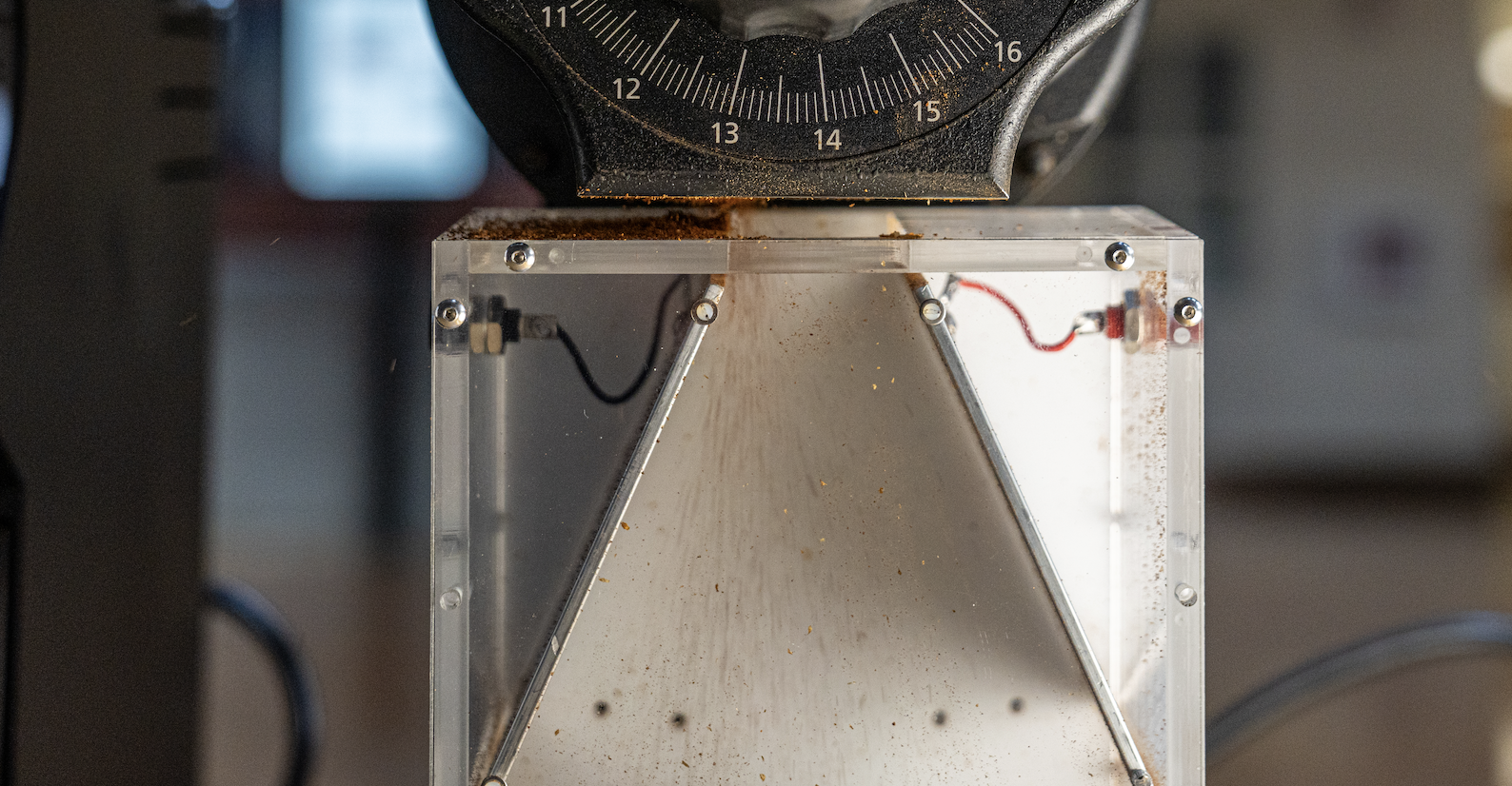
Chemical Strategies to Mitigate Electrostatic Charging During Coffee Grinding
Read the full academic publication.
The process of grinding coffee generates particles with high levels of electrostatic charge, causing a number of detrimental effects including clumping, particle dispersal, and spark discharge. At the brewing level, electrostatic aggregation between particles affects liquid-solid accessibility, leading to variable extraction quality. In this study, we quantify the effectiveness of four charge mitigation strategies. Our data suggests that adding small amounts of water to whole beans pre-grinding, or bombarding the grounds with ions produced from a high-voltage ionizer, are capable of de-electrifying the granular flows. While these techniques helped reduce visible mess, only the static reduction through water inclusion was found to impact the brewing parameters in espresso format coffee. There, wetting coffee with less than 0.05 mL / g resulted in a marked shift in particle size distribution, in part due to preventing clump formation and also liberating fine particles from sticking to the grinder. With all other variables kept constant, this shift resulted in at least 15% higher coffee concentration for espresso extracts prepared from darker roasts. These findings pose financial and sustainability implications, and encourage the widespread implementation of water use to de-electrify coffee during grinding.

Towards a Deeper Understanding of Espresso Extraction
Watch a lecture from Re:co, the Specialty Coffee Symposium, 2023 by Prof. Christopher H. Hendon.
As technology advances and our understanding of sensory attributes improves, it's possible to put more power in the hands of coffee professionals who seek to make coffee better. Get the latest update about this multi-year research project aimed at measuring espresso chemistry, correlating those measurements to sensory attributes, and laying the groundwork for science-based useable tools for the coffee industry.
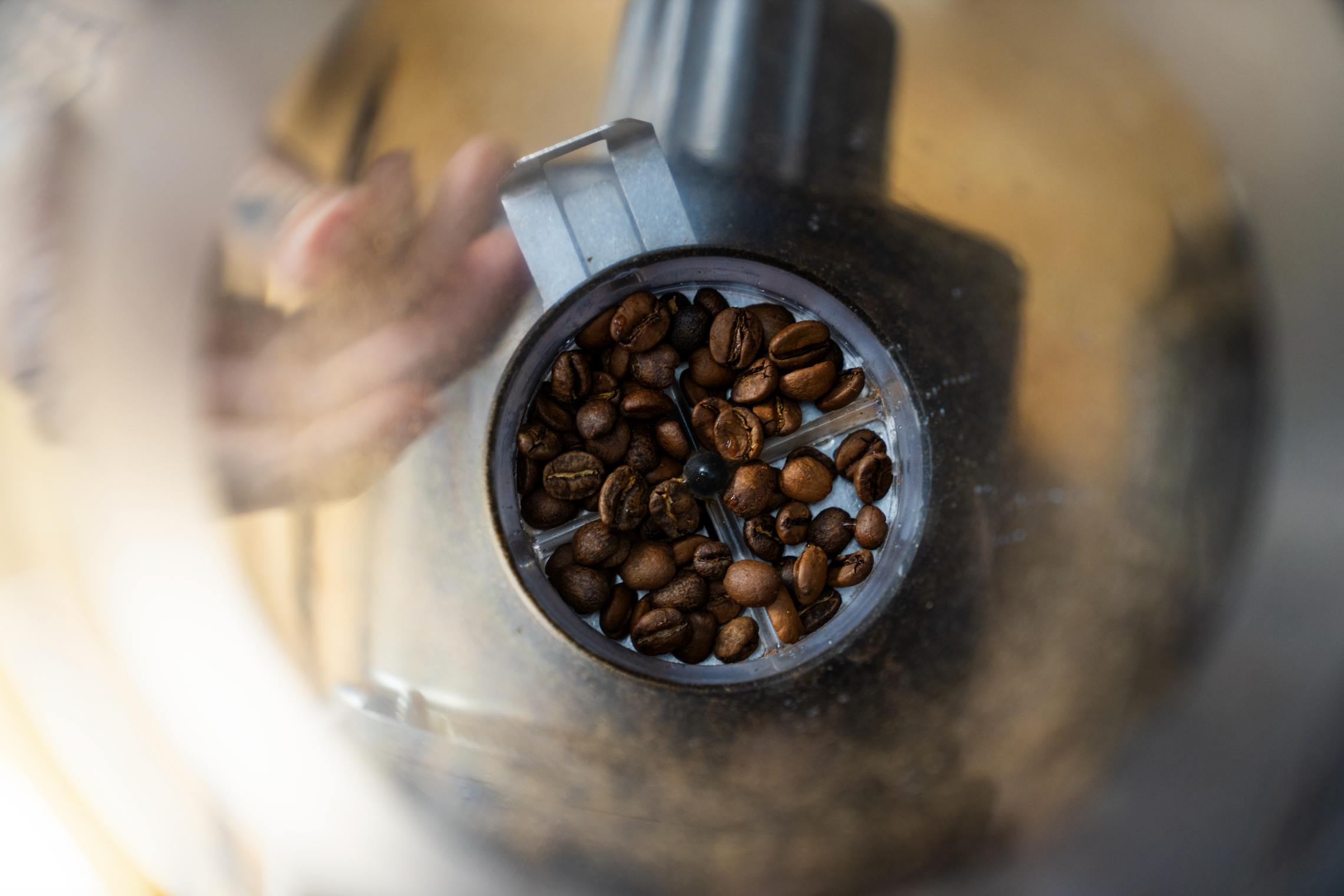
It’s Electric: Understanding—and Reducing—Static Electricity During Grinding
Read the full article on the SCA Portal.
Dr. JOSHUA MÉNDEZ HARPER and Dr. CHRISTOPHER H. HENDON discuss the chemistry and physics behind the electrification of coffee during grinding, its effect on extraction, and strategies to mitigate it. All images are adapted from their recent academic publication “Moisture-Controlled Triboelectrification During Coffee Grinding,” published in Matter.
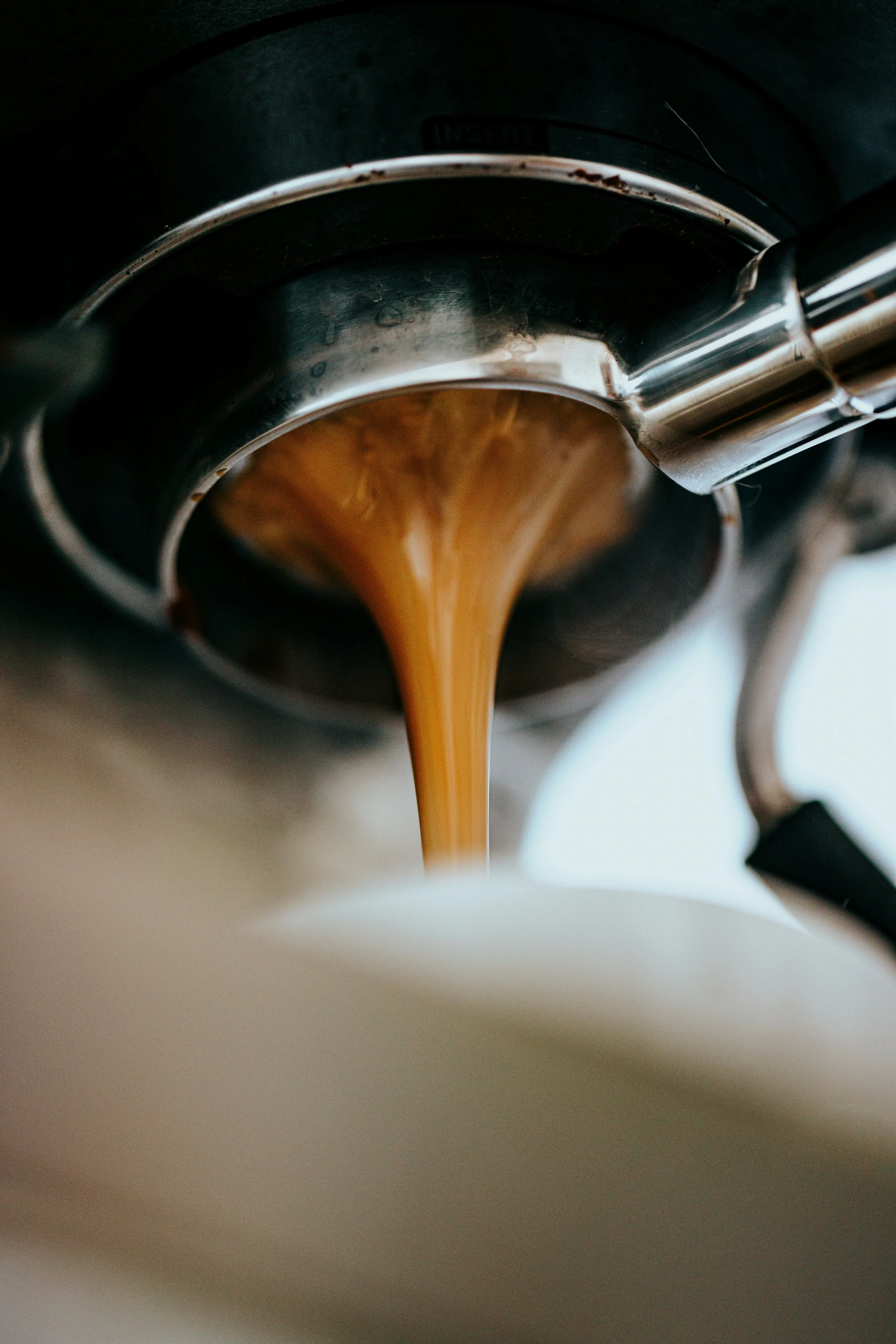
An Electrochemical Appraisal of Coffee Qualities
Read the full academic publication.
Despite coffee's popularity, there are no quantitative methods to measure a chemical property of a black coffee drink in situ and relate it to a flavor experience. Here we show that cyclic voltammetry can be used in coffee without any additional sample preparation to directly measure the strength of a coffee beverage and, separately, how dark the coffee has been roasted; these two properties are implicated in the sensory profile of the beverage. We show that the current passed for the cathodic features that precede hydrogen evolution are linearly related to beverage strength. The same features are suppressed with subsequent cycling, and we show that the magnitude of suppression is directly related to roast color, which dictates the ensemble chemical composition and thus flavor of the beverage. Together, this voltametric analysis decouples beverage strength from roast color and offers a new strategy for rapidly assessing chemical properties of coffee that correlate to flavor.

Amped Up: Using Electricity to Detect and Quantify Molecules in Brewed Coffee
Read the full article on the SCA Portal.
Assistant Professor CHRISTOPHER H. HENDON shares the theory underpinning an ongoing Coffee Science Foundation research project, supported by Simonelli Group, toward deepening our understanding of espresso extraction.

University of Oregon in Eugene Awarded Grant for New Espresso Brewing Control Chart
The Specialty Coffee Association (SCA) has chosen the University of Oregon in Eugene for a four-year espresso extraction research project, supported by the Simonelli Group, "Towards a Deeper Understanding of Espresso Extraction."